

How to Read Music for Saxophone Beginners

Learning to read music is one of the most important skills for any saxophone player. While many beginners start by playing by ear, understanding musical notation allows you to learn faster, play more accurately, and explore a much wider repertoire.
The good news is that reading music for saxophone is not as difficult as it may seem. With a few basic concepts and regular practice, beginners can quickly start recognizing notes and rhythms on the page.
In this guide, we will explore the fundamentals of music reading for saxophone and how you can develop this skill step by step.
Understanding the Musical Staff
Music is written on what is called a staff. The staff consists of five horizontal lines and four spaces where notes are placed.
Each position on the staff represents a different musical pitch. For saxophone players, the notes correspond to specific finger positions on the instrument.
Most saxophone music is written in the treble clef, which is the symbol placed at the beginning of the staff.
Once you become familiar with the staff, reading music becomes much easier.
Learning the Notes for Saxophone
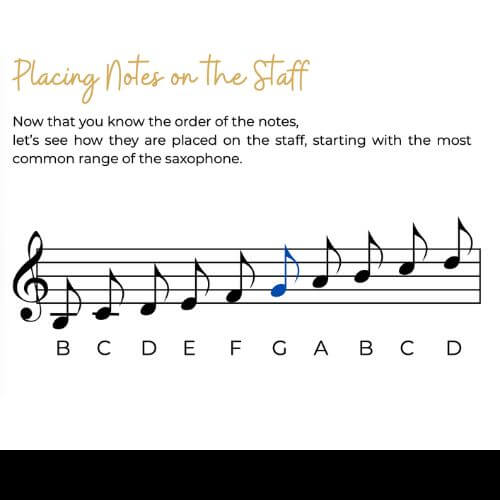
Each note on the staff corresponds to a specific fingering on the saxophone.
For beginners, it is helpful to start with the most common notes such as:
- G
- A
- B
- C
- D
These notes are often used in beginner exercises because they are comfortable to play and easy to recognize on the staff.
Using a saxophone fingering chart can help you connect what you see on the page with the finger positions on the instrument.
Understanding Rhythm and Note Values
Reading music is not only about recognizing notes. You also need to understand rhythm, which tells you how long each note should be played.
The most common note values include:
- Whole notes
- Half notes
- Quarter notes
- Eighth notes
Practicing with a metronome is extremely helpful for developing a strong sense of rhythm.
When beginners combine note reading with rhythm training, their musical progress becomes much faster.
Practicing Music Reading Step by Step
The best way to learn reading music is through simple and consistent exercises.
Start with small patterns and slow tempos. Focus on three things:
- recognizing the note
- placing the correct fingers
- playing with the correct rhythm
At first, it may feel slow, but with regular practice your brain begins to recognize patterns automatically.
Over time, reading music becomes much more natural.
Using Visual Tools to Learn Faster
Many saxophone students learn faster when they combine traditional sheet music with visual practice tools.
For example:
- fingering charts
- note recognition exercises
- rhythm practice videos
- guided practice routines
These tools help students connect theory with practical playing.
Inside the ChrisOnSax Practice Room, students can find structured exercises, visual fingering charts, rhythm training tools and guided practice sections designed to make learning music reading easier and more enjoyable.
Final Thoughts
Reading music may seem challenging at the beginning, but it is one of the most valuable skills a saxophonist can develop.
By learning the staff, understanding rhythms and practicing simple exercises regularly, beginners can quickly gain confidence and independence in their playing.
With patience and consistent practice, reading music will become a natural part of your musical journey.
FAQ
Is it hard to read music for saxophone?
Reading music for saxophone becomes easier with practice. Beginners can learn the basics quickly by starting with simple notes and rhythms.
Do saxophone players need to read music?
While it is possible to play by ear, reading music allows saxophonists to learn new pieces faster and play in bands or ensembles.
How can beginners practice music reading?
Beginners should start with simple exercises, slow tempos and visual tools such as fingering charts and rhythm training exercises.


 English (UK)
  Français